From Newton Heath to Manchester United: How the Club Began
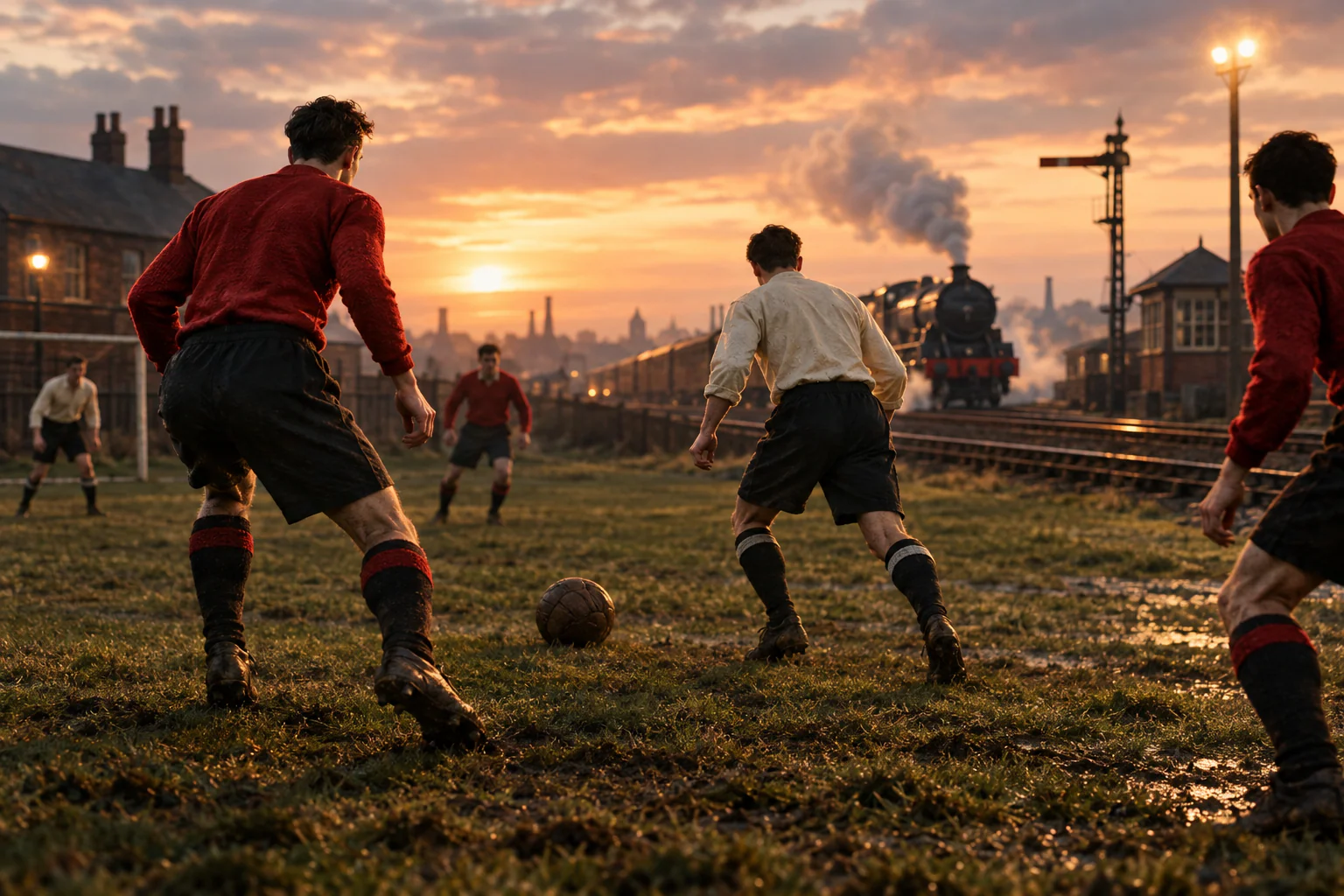
Where United’s story starts
Before Manchester United was a name, there was Newton Heath LYR: a football club with roots in the railway. Its early story takes in league football, relegation and financial trouble, followed by a change of name and the first major honours.
For supporters, it is a story worth knowing because it puts familiar names and places in order. The club’s formation, its adoption of the United name and its first match at Old Trafford were milestones in the same journey, not one event. Here is how that journey unfolded.

From railway team to Manchester United
The Newton Heath years
The club was formed in 1878 as Newton Heath LYR. The initials stood for Lancashire and Yorkshire Railway, and the early football reflected that connection. Railway workers at Newton Heath initially played against other departments of the railway and against other railway companies.
It is an appealing place to start the story: football played among people connected by their work. The original name preserves that connection, even though the name supporters use now is different. When you encounter “Newton Heath” in a history of United, you are looking at the club’s beginnings rather than a separate side.
Newton Heath entered the Football League’s First Division in 1892. After two seasons, the club was relegated to the Second Division. That early spell in the top flight is a reminder that the journey was not a simple march upwards. Getting there was one achievement; staying there proved another challenge.
Financial trouble and a new identity
Newton Heath later faced financial problems. Local brewery owner John Henry Davies invested in the club and helped save it. In April or May 1902, the club became Manchester United.
It is easy to hear the new name and imagine a neat break with the past. Instead, the change belongs within a longer story: the railway beginnings had already happened, as had that first spell in the First Division. The name recognised by supporters today arrived after both.
First honours and a new ground
United’s first league championship came in 1908, followed by the club’s first FA Cup in 1909. For supporters looking back, those are two distinct achievements: success across a league campaign and success in a knockout competition.
The early story then reached Old Trafford. United’s opening fixture there was played on 19 February 1910, a 4–3 defeat to Liverpool. It was a lively scoreline, if not the result United would have wanted, and a memorable beginning to the ground’s matchday story.

A closer look at the name change
Names that might have been
Manchester United was not the only name considered. Manchester Central and Manchester Celtic were among the alternatives rejected before the club took its new name.
For a supporter used to hearing “United” as part of the club’s identity, the alternatives offer an intriguing pause. Names carry associations: they are what supporters say, write and pass on when talking about their club. Looking at the choices considered makes the eventual name feel like a decision, rather than something that was always inevitable.
The first fixture as United
The first match under the new name was against Gainsborough Trinity on 6 September 1902. United won 1–0.
That result has its own place in the timeline. It was the first fixture played as Manchester United, not the first match in the club’s history. Remembering what a particular “first” refers to helps make sense of the early years without losing the Newton Heath chapter.
Questions supporters ask
Who is regarded as United’s first manager?
Ernest Mangnall is widely acknowledged in that role. He was appointed secretary in September 1903, so the title attached to his appointment differs from the role for which he is commonly remembered.
Who scored in United’s first FA Cup final win?
Sandy Turnbull scored the winner against Bristol City as United won the final 1–0. His goal gives supporters a matchday moment to attach to that first cup triumph.
Explore the history as a supporter
A good way to follow the story today is to read it in chapters. Start with the railway connection, then follow the club through the name change and early honours before turning to the history of the ground. Jotting down a short timeline can help keep the milestones in order.
If you are planning a trip to Old Trafford, use the matchday reading below as a starting point and check current arrangements independently before travelling. You can also explore from home: choose a name, match or place from the early story and follow the thread through the magazine’s history and supporter features.
Related reads on MUFCLUB
Browse Club History for more from the past, Old Trafford & Matchday for the ground and matchday, or Fan Culture for more on supporting United. The Archive brings together a wider selection of MUFCLUB articles.
MUFCLUB is an independent fan magazine, not affiliated with or endorsed by Manchester United.
More in Club History · Report a correction
Related reading
The Busby Babes and Munich 1958: How United Remembers
The story of the Munich air disaster, the people United lost and the ways supporters keep their memory alive.